Choosing an espresso machine involves understanding your needs, comparing features, and considering long-term maintenance.
Choosing the right espresso machine can be a daunting task with so many options available in various price ranges and styles. Whether you’re a coffee aficionado or just starting out, making this decision requires careful consideration of several factors to ensure that you get an appliance that meets your needs without breaking the bank.
Why Choosing This Type of Espresso Machines is Difficult
The market for espresso machines is saturated with numerous models from different manufacturers, each claiming superiority. The variety includes manual lever machines, semi-automatic options, and fully automatic units. Each type caters to a specific user base based on their skill level and desired coffee experience.
Common Buyer Mistakes
One common mistake buyers make is focusing solely on the price without considering long-term maintenance costs or compatibility with other kitchen appliances like grinders. Another frequent error is purchasing an espresso machine that’s too advanced for beginners, leading to frustration rather than enjoyment of the process.
Key Features Buyers Should Compare
When shopping for an espresso machine, it’s crucial to compare features such as water capacity, brewing speed, and milk frothing capabilities. Additionally, consider whether you need a steam wand or automatic functions like pre-infusion and programmable settings.
Water Capacity
The size of the water tank is important if you plan on making multiple cups without refilling frequently. A larger tank can be more convenient but may also take up more counter space.
Brewing Speed
Espresso machines vary in how quickly they brew a shot, which affects your morning routine efficiency. Faster brewing times are generally preferred for busy mornings or high-volume use.
Real-World Use Experience and Expectations
In real-world scenarios, espresso machines can significantly enhance the coffee-making experience by providing professional-quality results at home. However, users should have realistic expectations about maintenance requirements such as cleaning after each use to prevent mineral buildup and ensure longevity of the machine.
Daily Maintenance
Daily cleaning is essential for maintaining optimal performance and extending the life of your espresso machine. This includes wiping down surfaces and descaling regularly based on water hardness levels in your area.
Where this Product Fits (Strengths & Weaknesses)
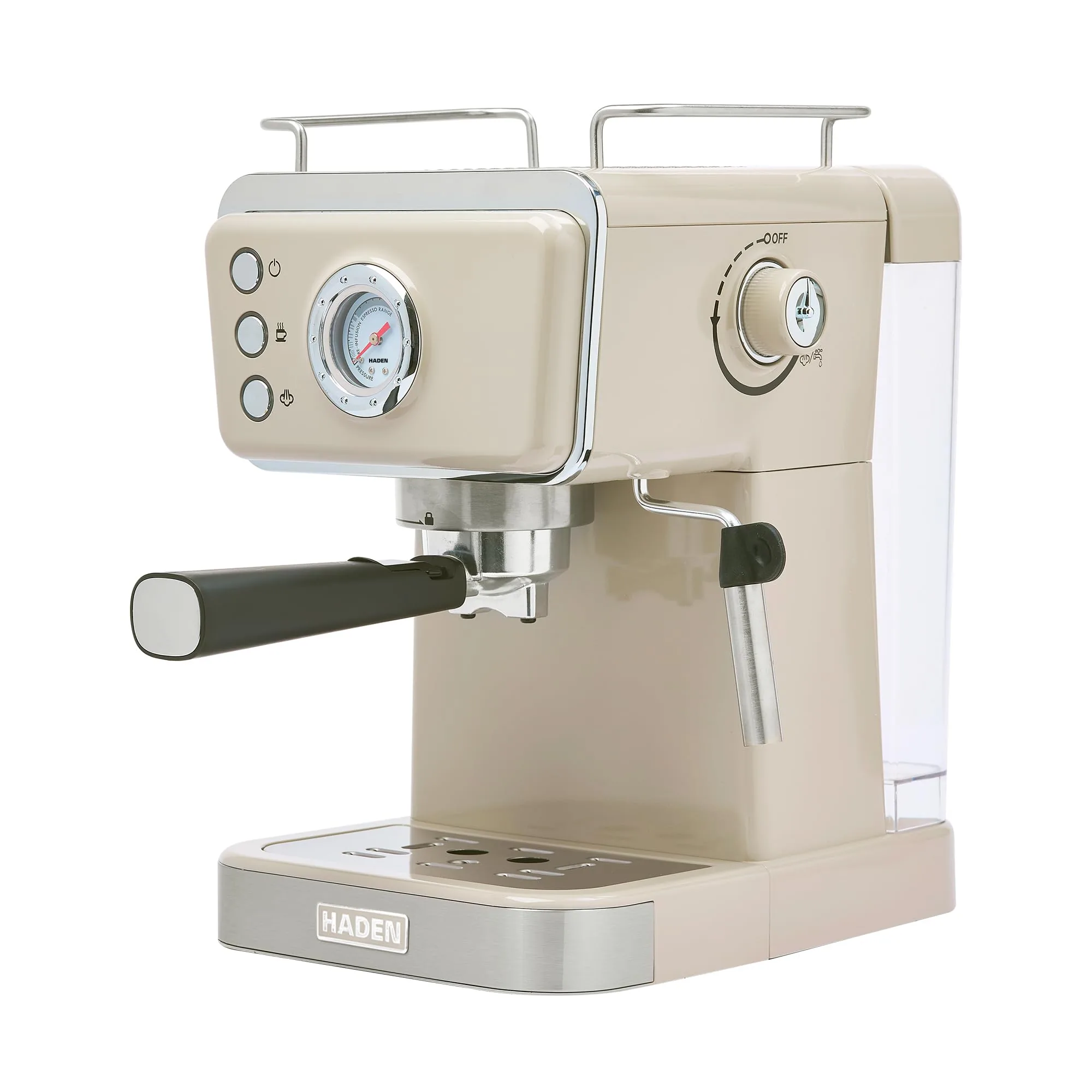
The HADEN Barista Brew Espresso Coffee Machine offers a balance between functionality and ease-of-use, making it suitable for intermediate coffee enthusiasts who want to experiment with different brewing techniques. Its strengths lie in its stainless steel construction which adds durability and aesthetic appeal, along with the milk frother that allows users to create creamy lattes and cappuccinos.
However, this machine may not be ideal for those looking for fully automated features or compact designs due to its size and manual operation aspects like pulling levers. It also requires some initial setup time compared to simpler models.
Who Should Avoid This Product
Beginners might find the HADEN Barista Brew Espresso Coffee Machine challenging because it lacks automatic functions that simplify espresso making, such as pre-infusion or programmable settings for shot volume and temperature control. Those with limited counter space should also consider alternatives since this model is relatively large in size.
Comparison With Alternative Options In The Same Category
When compared to other semi-automatic espresso machines like the Breville Infuser Espresso Machine, the HADEN Barista Brew offers similar features but at a slightly lower price point and without some advanced functions. For users prioritizing budget over automation, this could be an attractive option.
Maintenance And Long-Term Considerations
Regular maintenance is key to keeping your espresso machine running smoothly for years. This includes cleaning parts after each use, descaling every few months based on water hardness levels in your area, and replacing worn-out components like seals or gaskets as needed.
Cleaning Tips
Use a mixture of vinegar and water (50/50) for descaling.
Clean the steam wand with hot water immediately after frothing milk to prevent clogging.
Frequently Asked Questions
How Do I Choose Between Manual Lever Machines vs. Semi-Automatic Models?
Manual lever machines offer more control over brewing pressure but require practice and skill, making them better suited for experienced users or those willing to learn the nuances of espresso extraction. On the other hand, semi-automatic models are easier to use with preset functions that simplify operation.
Is It Worth Investing In A High-End Espresso Machine?
Investing in a high-end machine can be worthwhile if you’re serious about coffee and want professional-grade features like precise temperature control or automatic milk frothing systems. However, for casual users, mid-range options often provide sufficient quality without the premium price tag.
What Are The Maintenance Requirements For An Espresso Machine?
Regular maintenance includes daily cleaning of surfaces and components after use to prevent mineral buildup, weekly descaling based on water hardness levels in your area, and periodic replacement of parts like seals or gaskets as needed for optimal performance over time.
Final Neutral Thoughts
Choosing an espresso machine is a personal decision that depends heavily on individual preferences regarding coffee quality expectations, budget constraints, and willingness to invest time into learning how to operate the equipment effectively. The HADEN Barista Brew Espresso Coffee Machine presents itself as a solid option within its price range for those looking for balance between functionality and ease-of-use.