Choosing the right range hood involves understanding your kitchen’s needs, common mistakes to avoid, key features to compare, and maintenance considerations.
Choosing the right range hoods can be a daunting task. With so many options available in various styles, sizes, and functionalities, it’s easy for homeowners to feel overwhelmed when making this important decision. Each range hood serves different purposes based on kitchen layout, cooking habits, and aesthetic preferences. This guide aims to simplify your selection process by highlighting critical factors that should influence your choice.
Why Choosing the Right Range Hoods Is Difficult
One of the primary challenges in selecting range hoods is understanding their specific roles within a kitchen environment. While some range hoods are designed for powerful ventilation and smoke extraction, others focus on aesthetic appeal or energy efficiency. This diversity can lead to confusion about which features truly matter for your needs.
Another difficulty lies in balancing form with function. Many homeowners prioritize the look of the hood over its performance capabilities, leading them to overlook crucial aspects like CFM (Cubic Feet per Minute) ratings and filtration systems. Conversely, those who focus solely on functionality might end up choosing a range hood that doesn’t complement their kitchen’s design.
Common Buyer Mistakes
Overlooking Ventilation Needs
Many buyers underestimate the importance of proper ventilation when selecting range hoods. A poorly ventilated cooking area can lead to poor air quality and potential health issues, making it essential to choose a model with adequate CFM for your stove size and kitchen layout.
Ignoring Installation Requirements
Some range hoods require professional installation due to their weight or complexity. Failing to account for this upfront can result in unexpected costs and delays during the renovation process.
Key Features Buyers Should Compare
When shopping for range hoods, it’s crucial to compare several key features:
CFM (Cubic Feet per Minute): This measures how much air a range hood can move, which is vital for effective smoke removal.
Filtration System: Different models offer various filtration options such as charcoal filters or baffle plates. Understanding the type and efficiency of these systems will help maintain kitchen cleanliness.
Noise Level: Some high-performance hoods operate quite loudly, potentially disturbing conversations during cooking times.
Real-World Use Experience and Expectations
In practical use, range hoods significantly enhance your cooking experience by maintaining air quality and reducing odors. However, expectations should be managed regarding noise levels and maintenance requirements. For instance, while a powerful hood might excel at ventilation, it could also generate considerable noise during operation.
Where This Product Fits (Strengths & Weaknesses)
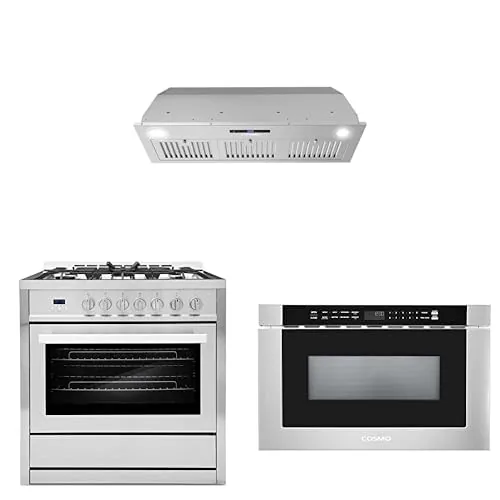
The COSMO 3-Piece Kitchen Appliance Packages with its integrated range hood offers several strengths:
Integrated Design: The package includes multiple appliances that complement each other aesthetically and functionally.
Efficient Ventilation: With a powerful CFM rating, it effectively removes smoke and cooking odors.
However, there are also notable weaknesses to consider:
- Installation Complexity: Given the integrated nature of this set, installation might require professional assistance, adding extra costs.
Who Should Avoid This Product
Homeowners with limited kitchen space or those looking for a standalone range hood without additional appliances should avoid packages like the COSMO 3-Piece Kitchen Appliance Packages. Similarly, individuals who prefer more flexibility in choosing individual components of their cooking setup may find this package restrictive.
Comparison With Alternative Options in the Same Category
When comparing range hoods, consider models that offer similar features but come with different installation requirements or design aesthetics. For example, a standalone range hood might provide greater customization options compared to an integrated set like COSMO’s offering. Additionally, some brands focus more on noise reduction technologies which could be beneficial for those prioritizing quieter operation.
Maintenance and Long-Term Considerations
Regular maintenance is crucial for the longevity of any range hood. This includes cleaning filters regularly according to manufacturer guidelines and checking seals and connections periodically to ensure proper ventilation.
Long-term considerations should also factor in energy efficiency ratings, as models with higher efficiencies can lead to significant savings over time while reducing environmental impact.
Frequently Asked Questions
How Do I Determine the Right CFM for My Range Hood?
The appropriate CFM depends on your stove size and kitchen layout. As a general rule of thumb, multiply the width of your cooking surface by 100 to get an estimated minimum CFM requirement.
What Are the Benefits of Professional Installation Over DIY Methods?
Professional installation ensures that all components are correctly aligned and secured, reducing risks associated with improper setup such as leaks or structural damage. It also allows for better integration into existing ventilation systems if applicable.
Is it Worth Investing in a Range Hood With Advanced Filtration Systems?
For those who frequently cook oily foods or want to minimize kitchen odors, investing in advanced filtration systems is highly beneficial despite the higher upfront cost. These systems provide cleaner air and require less frequent replacement than basic filters.
Final Neutral Thoughts
Selecting range hoods requires careful consideration of both functional needs and aesthetic preferences. While integrated packages like COSMO’s offer convenience and cohesive design, they may not suit everyone’s requirements or space constraints. By understanding your kitchen dynamics and comparing key features across different models, you can make an informed decision that enhances your cooking experience without compromising on practicality.